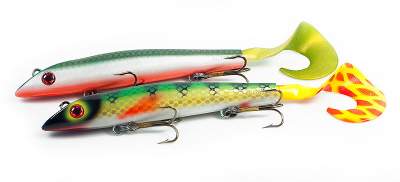
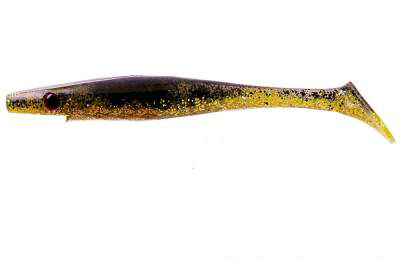
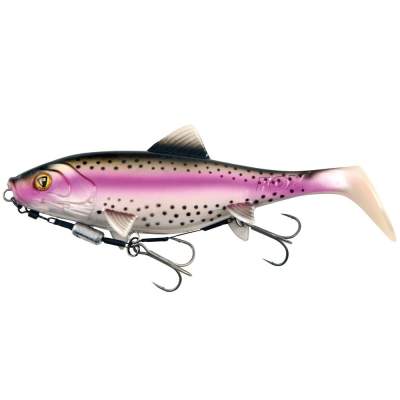
Lures & Spinners are both simple and effective, with the idea to imitate the prey fish for the pike & zander. Why these predator fish go for them is a mystery as often they look nothing like the prey fish. Lures, spinners, and spoons are the classic categories, but the spinnerbait has the combination of being both spinner and lure. They all can be equally effective on their day especially in the summer and autumn month's, and there are literately thousands to choose from all made from a variety of materials. Their effectiveness is governed by weight, colour, actions of the lure and the speed of retrieval by the angler.
January - March. Water temperature will be at its lowest during January and February so slow moving lures fished very close to the bottom often making `bottom contact' will be essential. Ideally lures that can pause during the retrieve without snagging are best, for this reason jigs rigged with soft plastic shads or grubs, weed less spoons and spinnerbaits are perfect, also modified Bull Dawgs with the belly treble removed and fitted on the back can be used where larger baits are required. March sees water temperatures and daylight hours increase, stream fed shallow bays with emerging weed will be very attractive to pike preparing to spawn. Slow moving baits that can be fished subtly just sub - surface, shallow running minnow plugs, these can be `twitched' plus small slow sinking/suspending jerkbaits, would be my choice.
April - June. Throughout this period, the pikes feeding activity increases dramatically with the rising water temperature and the need to eat, to recover condition, after the rigors of spawning. The pike will stay in the shallow water, which warms quickly, until it gets too hot for comfort and they depart into cooler deeper water. An interesting pattern to note in April is how fluctuating water temperature in the shallows effects the pikes response to lures. Overnight frosts following a warm day has a cooling, "slowing down", effect on the pike, by mid - morning the pike, which stay in these shallow areas, start to warm up again with the water and faster moving lures, that were previously ignored, suddenly become productive. This pattern is very important to anyone fishing in the spring, especially in Ireland or Scotland. With the pikes high level of activity lures should be fished high in the water "at speed ", no deeper than mid depth. Surface lures, shallow divers, in-line spinners and bucktails along with a variety of jerkbaits in both high buoyancy, "to ride over weed ", and slow risers allowing you to break up the retrieve pattern are all good choices.
July - September. High water and air temperatures force big pike into deep water where they rest for long periods, feeding spells are often short around first and last light, windy overcast conditions can be enough to perk sport up. Night fishing with surface lures or bucktails can be extremely successful but you must be very organised! If you can go afloat to reach deep water now is the time to do it, fishing around weirs or places where incoming "cooler" water enters the river will greatly improve your chances. During this period fast moving baits that have erratic actions and change depth frequently are perfect for searching out feeding pike, crashing deep diving plugs into the bottom is a useful tactic that can also provoke action. This period requires a diverse selection of Lures and lure Styles, you must have to have a bit of "imagination" when using them. Jerkbaits in all densities are essential, Bull Dawgs and Ugly Joe's and big offset Spinnerbaits are the preferred choices, but don't feel limited to these.
October - December. After the testing times or the last three months the cooler days or autumn sharpen the pikes appetite, be prepared for action! You'll need to adjust to the cooling trend in water temperatures gradually fishing deeper and slower until by December most action will come with lures that can be crept along the bottom, at slow speed. At this time of year "coloured water" due to flooding becomes a major factor so noisy `rattling' baits and highly "visible" fluorescent coloured lures are recommended, remember the pike will have to feel a baits `presence" through its action and vibration before it will see it. At the beginning of this period lures that can be fished at speed and at a variety of depths are ideal so sinking jerkbaits Bull Dawgs, Ugly Joe's, big spinnerbaits or trolling large plugs are my preferred choices. For December revert to Jan -Feb. tactics if water has cooled rapidly.
These typical spinnerbaits
are easy and cheap to buy, but can be deadly on their day for catching pike in
particular. They are weighted from a few grams up to 5\8 oz in most occasions,
the beauty lies in the anglers favour because they can be used in all depth's
dependant on weight and action given by the angler and speed of retrieval. One
of my largest pike of 27lb 12oz was caught on one when typical methods failed.
Long traces are essential when using these as the pike often spin to unhook
themselves and if a short trace is used, then bite-offs occur. There are many
types to choose from and all have their day, I find that those with shiny flash
properties favour best, silver being the best.
2 x Masterline Toothy Critter spinnerbaits, the twin spin
Motivator which is a superb twin blade spinnerbait, fish it with steady pulls,
or sink & draw, or constant retrieve methods. They come in both Tandem
Colorado, Tandem Colorado & Willow in weights 15grams. Fish in depth's from
0-20 ft. The twin spin Maximiser has willow leafed blades and can be fished in
deeper water and much faster than the Motivator, use either twitched, jerked or
worked on a steady retrieve and expect savage takes from the Pike. Fish in
depth's from 0-30 ft.
Here are some typical
small spoons and spinners, although there are some like the Kuusamo Professor
00 spoons which are very large and heavy for getting down to the depth's and
for trolling methods. Lures are artificial baits used for catching predatory
fish who mistake them for smaller fish. There are two main types: A spinner has
a blade which rotates around a fixed bar axis, while a spoon is a piece of
metal shaped like a spoon, although does not usually spin, but wobbles as it is
retrieved. There are three different types of spoon: The Norwich spoon, the
Vincent spoon and the Toby, starting with the Norwich spoon, in it's basic
version, it has an egg-shaped outline, comes in various colours and with
numerous names. Copper versions are popular, when retrieved gently their slow
wobble and colour make them resemble an injured preyfish. Secondly the Vincent
spoon looks similar to the Norwich spoon, but has a more elongated shape, tends
to give a slow, shallow wobble. Lastly, the Toby which is made of thicker metal
than the other two types, being both long and thin in shape and good for
fishing at range and in deeper water.
Here are two typical types
of barspoons, they are really spinners, they have a wire axis around which
spins an egg-shaped blade which is attached at one end. Some of the smaller
types are superb for small pike and zander, they vibrate and flash when
retrieved and can be drawn back very slowly. Barspoons come in different
variations, the kidney spoon has a kidney-shaped blade, the Colorado, has wings
and a blade at both ends. Again there are variations to both weight fixed and
colours.
Typical spinners tempt fish through a
combination of visual attraction and the vibrations given off in the water as a
metal blade revolves around a fixed stem. The most popular types of spinner are
made by Mepps, in the smaller sizes. Similar spinners are made by Rublex, and
Abu. Mepps and Rublex have been around for years and are tried and tested
spinners in which to try this side of the sport, and are available in most
tackle shops around the UK. The Summer and Autumn months are probably more
productive and certainly more enjoyable, I most enjoy lure-fishing for pike in
warm shallow waters, spinners are superb pike-catchers in the right hands and
the all-time classics from Abu, Mepps and Ondex go from strength to strength.
Confidence is everything in the key to success.
To keep these Plugs, lures and spinnerbaits safe and
protected, you can buy these Lure Caddies purposely built to hold a wide range
and size together with spare traces, swivels and links. This particular model
will hold an unhooking mat with straps, and unhooking tools like the wire
cutters, forceps, scissors and scales.
To sum up Spoons, spinners and
spinnerbaits rely mainly on their flash and vibration to mimic predators prey
fish, they are very cost-effective lures, and are relatively easy to use. For
weedy and snaggy waters, spinnerbaits are unbeatable, if you can't find what
you want in your local tackle shop, then order online from
direct, they will post an excellent catalogue.
Home
Search
About Pike
Pike
Top 50 Pike
Pike Photos
Pike Story
About Zander
Zander
Top 50 Zander
Zander Photos
Pike & Zander Fishing
History
Locating
Fishing Methods
Baits
Lures & Spinners
Plugs
End Tackle
Rigs & Tackle
Fishing Knots
Handling Fish
Fishing Venues
Message Board
Resources
Pike Society Links
Fishing Links
Fishing Holiday Links
Other Links
Submit Site
Link To Us
Extras
Fishing News
Site Map
Contact Information
Phone Numbers
Contact Us
Tell Others
Tackle For Sale
Lure Fishing Books
Lure Fishing Videos
Bivvy Tents
Floats
Books
DVDs
Lures
Rods
Planning a fishing trip? Need to know the
Moon Phases?